
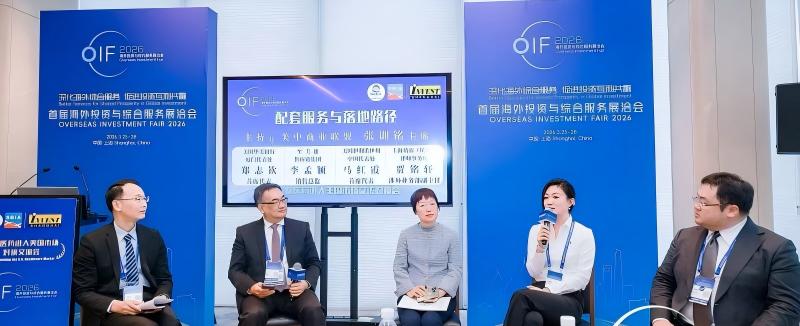
As one of the key featured events of the 1st Overseas Investment and Integrated Services Fair, the Seminar on Medical Devices Entering the U.S. Market was successfully held on March 26, 2026, in Shanghai.
On March 26, 2026, during the 1st Overseas Investment and Integrated Services Fair ("Haiqiahui"), the "Seminar on Biopharmaceuticals Entering the U.S. Market" was successfully held at the Shanghai Eastern Hub International Business Cooperation Zone, co-hosted by the US-China Business Alliance and the Shanghai Biopharmaceutical Industry Association, with support from the Shanghai Foreign Investment Promotion Center.
This event was one of three U.S.-focused special sessions at the 1st Haiqiahui and stood out as one of the more professionally in-depth sub-forums at the exhibition. The 1st Haiqiahui, hosted by the China International Investment Promotion Association (CIIPA), represents a national-level flagship event focused on facilitating enterprise globalization and building a landmark platform for overseas investment and integrated services.
As a professional platform with deep roots in the U.S. local market and a long-standing commitment to connecting U.S. and Chinese business communities, NOACC's decision to make its voice heard in Shanghai at this critical juncture—the 1st Haiqiahui—is itself a noteworthy signal. It demonstrates that amidst the increasingly complex international economic and trade landscape, the pragmatic ties between U.S. business and professional expertise and Shanghai, rooted in industrial cooperation and market demand, have not been interrupted.
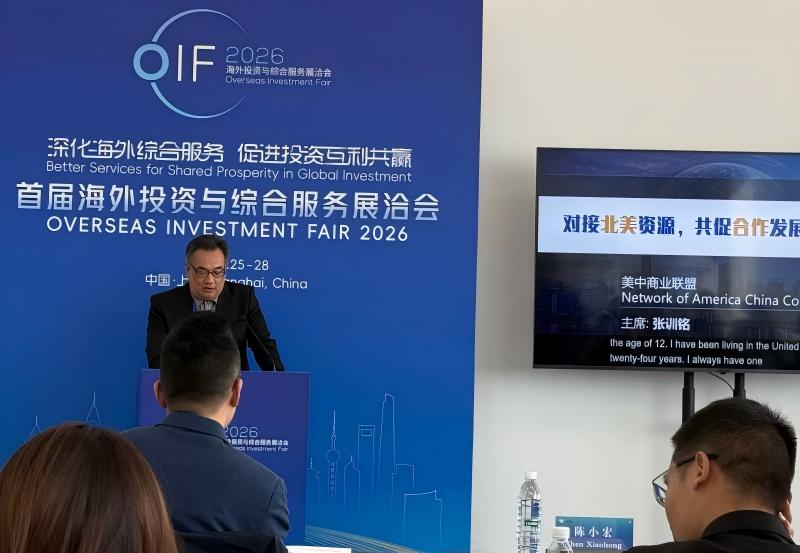
This seminar focused on the core issues facing biopharmaceutical enterprises entering the U.S. market.
The United States represents a significant market for the global biopharmaceutical industry, with substantial influence in innovation, R&D, regulatory systems, and the commercial environment. For Chinese biopharmaceutical companies, gaining a deep understanding of U.S. regulatory logic, market access pathways, and the commercial landscape is a crucial prerequisite for advancing product internationalization.
The event specially invited professionals with direct experience in U.S. regulatory and industry practices to come to Shanghai as speakers, and organized in-depth matchmaking and exchange sessions with corporate representatives, industry experts, and service providers. Participants discussed topics including U.S. market access, regulatory pathways, industrial collaboration, and on-the-ground service support, providing companies seeking to enter the U.S. market with practical, actionable insights and recommendations.
At the same time, the US-China Business Alliance fully leveraged its professionally networked advantages accumulated in the U.S. local market, bringing together resources from multiple sectors and presenting them directly to Shanghai-based enterprises.
The Shanghai Foreign Investment Promotion Center presented an overview of Shanghai's initiatives to support enterprises in going global. U.S. local agencies, including the Illinois China Representative Office and the Bay Area Council of California, delivered special presentations on their respective local investment environments and business attraction resources, providing location-specific references for companies interested in entering the U.S. market. Professional service organizations such as ZMT Supply Chain Group and East West Bank also engaged in exchanges around the practical needs of enterprise overseas expansion, covering key areas including logistics and finance.
By actively participating in the 1st Haiqiahui, the US-China Business Alliance presented its comprehensive capabilities—built on systematic professional resources and practical matchmaking arrangements—across market understanding, regulatory pathways, resource connections, and on-the-ground implementation services. This provided participating companies with a relatively complete reference framework for going global.
This also reflects that, in the current international economic and trade environment, the pragmatic ties between the U.S. and Chinese business communities around industrial cooperation remain intact, and practical collaboration continues to be the shared choice of both sides.